Ontario built a secret test that decides how much therapy your autistic child receives. Then it convinced a tribunal that letting you see it was a threat to the province’s finances.
Drag to rotate, or use the Rotate and Reset buttons
01
The accountThe family describes function, risks and support needs.
02
The translationInformation becomes a structured administrative record.
03
The correctionA review must be able to address the disputed part of the decision.
Related model
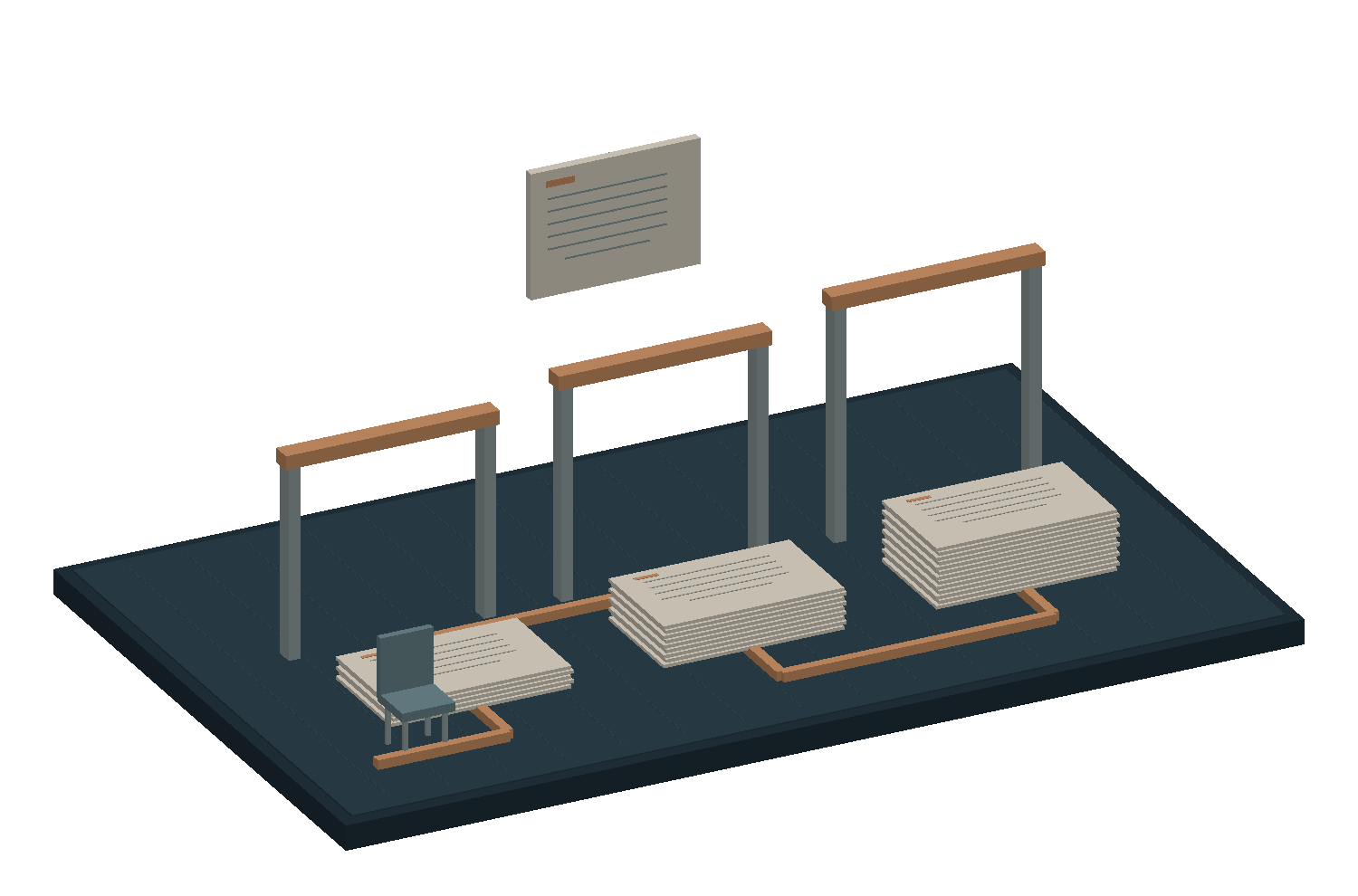
Plate 17 · The allocation recordConceptual model
A closed processing cabinet between an input file and an output record. It is a conceptual model, not a reconstruction of the DoN tool. The sealed model is not the actual scoring tool and contains no real child’s data. The design does not claim a specific scoring weight, formula or deliberate manipulation. Review rights and routes differ; a service complaint is not automatically an appeal of the allocation itself.
Illustrative model · not evidence
What is PO-4494?
A 2024 Ontario Information and Privacy Commissioner order about whether the public could see the OAP Determination of Needs Tool. The IPC allowed the ministry to withhold the tool in full.
This page shows
01what Ontario withheld
02the legal rationale used to keep it secret
03why the fraud argument matters
04how this affects families trying to dispute funding decisions
A father in Ontario wanted to know one thing: how the government decides how much money his autistic child gets for therapy.
He did what citizens are supposed to do. He filed a freedom-of-information request with the Ministry of Children, Community and Social Services for the criteria used to set a child’s core-services budget under the Ontario Autism Program. The ministry searched its files and found exactly one record that answered the question, a 26-page instrument called the Determination of Needs Tool. Then it refused to give him a single page.
The legal ground is worth sitting with. The ministry did not say the tool held another child’s personal information, or that it was a cabinet secret. Its lead argument invoked section 18(1)(d) of the Freedom of Information and Protection of Privacy Act (FIPPA): the clause that lets the government withhold records whose release could be injurious to its financial interests, or to its ability to manage the economy.
Stripped of the legalese, the position was this. If parents could see how their children are scored, some of them would lie. They would coach their answers, inflate their children’s needs, and walk away with more public money than they deserve. In March 2024, an adjudicator at the Information and Privacy Commissioner agreed. The tool would stay secret. The order is public, and it is called PO-4494.
The test you take blind
Every family seeking core clinical services goes through the Determination of Needs process at least once a year. The tool holds roughly 90 items, scored by a care coordinator in what the ministry calls a semi-structured interview. The coordinator asks questions and assigns ratings across ten domains, reaching into nearly every part of a child’s life.
Ten domains, one hidden score
Determination interview
The domains are named. The scoring rule is not.
26pages sealed
Score
withheld
Missing from public view
10 public domainsprivate scoring rubric
01Communicationsealed
02Social interactionsealed
03Play and leisuresealed
04Activities of daily livingsealed
05Motor skillssealed
06Cognitive skillssealed
07Sensory systemsealed
08Interfering behaviourssealed
09Mental healthsealed
10Adaptability and resiliencesealed
Parents can answer questions in all ten areas. They cannot see how those answers become limited, moderate, or extensive support.
Families can describe a child’s needs across the domains. They still cannot inspect the rubric that turns those answers into a funding band.
Source›
IPC Order PO-4494 (Mar 4, 2024). The ministry's own description of the Determination of Needs Tool, at para. 14.
The output of that scoring is a funding allocation, sorting a child’s needs into bands: limited, moderate, or extensive. Parents consent to having intimate details about a vulnerable child recorded and evaluated by a stranger. They are not allowed to see the framework their child is being measured against.
The dollars attached to those bands are not trivial, and the spread is enormous. The Financial Accountability Office puts core clinical services funding between roughly $6,600 and $65,000 per child per year, based on assessed need. The secret test is the thing standing between those two numbers.
One conversation, a tenfold difference
Estimated annual funding point
$48,648
Extensive support band
$6,600$65,000
Drag the slider to feel the scale. The point is not precision for one child. It is the enormous spread a hidden process can shape.
Extensiveup to ~$65,000
Moderatemiddle band
Limitedfrom ~$6,600
Why this matters: one hidden score can move a child across a funding range of roughly $58,400 per year.
Source›
Financial Accountability Office of Ontario, MCCSS Spending Plan Review (June 2024): the core clinical services funding range.
Casting aspersions
The heart of PO-4494 is the fraud rationale, and it deserves to be read carefully, because the implication is severe. Disclosing the tool, the ministry argued, could reasonably be expected to let some families misrepresent their children’s needs, compromise the process, and force the province to build a costly replacement.
The father’s response was blunt. He called it reprehensible for the ministry to cast aspersions on already stigmatized parents of autistic children. The adjudicator sided with the ministry.
What was asked, and what was argued
parent position
What parents asked for
The criteria used to decide how much therapy funding their child receives.
Section 18(1)(d)
government position
What Ontario argued
Disclosure could let some families misrepresent needs, increase payouts, and harm the province’s finances.
The order records no evidence that a single family had actually gamed the tool. The accepted harm was hypothetical and forward-looking.
Source›
IPC Order PO-4494. The order records no evidence of actual misrepresentation; s.18(1)(d) requires only a reasonable expectation of harm, not proof.
Here is the part that should give any reader pause. The order records no evidence that a single family had ever actually gamed the tool. Section 18(1)(d) requires only a reasonable expectation of harm, not proof. There was no hearing at which the claim could be tested, no cross-examination, and no expert evidence about the program’s real experience of fraud. The assertion was accepted because the law did not require it to be proven.
Fraud was not the only theory. The adjudicator also accepted that the information in the tool has commercial value from not being known, a separate branch of section 18 that protects government information the way the law protects a private company’s trade secrets. A clinical instrument built to assess disabled children, administered at public expense, was found to hold trade-secret-like commercial value the public may not see. The order never asks the obvious question: commercial value to whom?
A program for disabled children was defended, successfully, on the premise that the parents of those children are a fraud risk. The premise never had to be tested against a single real case.
The lottery ticket and the autistic child
The most revealing move in the order is the precedent the ministry reached for. To justify the secrecy, it pointed to an earlier decision about lottery tickets, specifically the security numbers printed on lottery transaction records, where releasing the numbers would undermine the integrity of the lottery and invite fraud. The ministry argued the Determination of Needs Tool was analogous. The adjudicator accepted the comparison and applied it.
A scratch ticket and a child, redacted the same way
The precedent Ontario reached fors. 18(1)(d)
PO-1799
Lottery ticket security numbers
Releasing them could undermine the lottery and invite fraud.
→adopted by
PO-4494
Autism Determination of Needs Tool
26 pages withheld in full under the same financial-harm logic.
The memorable point is not that a child is a lottery ticket. It is that Ontario used the same financial-harm logic to keep both systems’ scoring information secret.
Source›
IPC Order PO-4494, adopting Order PO-1799 (lottery-ticket security numbers) as precedent.
The instrument that decides how much therapy an autistic child receives was placed in the same analytical category as the anti-counterfeiting codes on a scratch ticket.
The numbers that break the rationale
The entire case rests on one claim: that disclosure threatens Ontario’s finances because families would extract more money than the program can sustain. The province’s own record makes that hard to credit.
Most children are taking nothing
91,974
registered children
20,711
in core clinical services
71,263
waiting
Core clinical accessFewer than 1 in 4
fundedwaiting majority
The dominant risk shown by the record is not overpayment. It is non-delivery.
Source›
Ontario Ministry of Children, Community and Social Services FOI CSS2026-0749, March 4, 2026.
The constraint on the program is not that too many children are taking too much. It is that the overwhelming majority are taking nothing, sitting on a waitlist for years while committed dollars go unspent. The Financial Accountability Office has flagged roughly $174 million in autism funding carried forward rather than delivered as services.
Source›
Financial Accountability Office of Ontario, MCCSS Spending Plan Review (June 2024): approximately $174 million in committed autism funding carried forward rather than delivered as services.
The same pipe lets few through
91,974
registered children enter
annual determination and re-assessment load
re-assessments exceed 38% of all assessments
20,711 funded22.5%
71,263 still waiting77.5%
When re-assessing funded children consumes more of the pipe, fewer new children move off the waitlist.
Source›
CBC News (Sept 2024), from documents obtained under FOI: re-assessments exceeded 38% of all assessments by mid-2024. Registration, funded, and waiting counts (91,974 / 20,711 / 71,263): MCCSS Ontario Autism Program figures, May 13, 2026, obtained by the Ontario Autism Coalition under Freedom of Information (supersedes the January 7, 2026 CBC snapshot: 88,175 / 20,666 / 67,509).
The bottleneck the evidence describes is the determination process itself, the same assessment the tool governs, clogged because every funded family must be re-assessed every year.
There is a way to test whether the blackout was really about protecting public money. Less than a year after PO-4494, the same Commissioner faced an almost identical question about the Passport program, which scores adults with developmental disabilities for funding. That decision did not break from the autism ruling. It adopted it. The only reason anything was disclosed is that the ministry had already published part of the Passport tool online, and you cannot claim financial harm from releasing what is already public. For autism, the ministry published nothing and sealed all 26 pages.
Where the Commissioner has grown genuinely demanding is elsewhere. In a 2025 order about major transit records, an adjudicator rejected the same financial-harm exemption because the claimed harm was speculative and not tied to anything specific in the records. Same exemption, same year, two different burdens. The autism tool was sealed on the lighter one.
What Ontario admitted in court
The freedom-of-information fight is not the only place this program has been tested. In early 2025 the Divisional Court released companion judicial-review decisions arising from a human-rights proceeding that served as a test case for nine families. The lasting value of those rulings is not the result. It is the record, because to defend its program, Ontario put its own evidence before the tribunal and the court wrote it down.
Under the first version of the program, Ontario’s own evidence was that funding reached only about 15% of eligible autistic children, while the other 85% received nothing. The province nearly doubled the autism budget in 2019, from $361.5 million to $667 million, to fix exactly that. Today’s roughly one in four served still describes the same condition: fund a minority, waitlist the majority.
legacy plan
$52,000
→
redesigned maximum
$41,400
One test-case child’s yearly funding ceiling, before and after the redesign the secret tool now governs.
Source›
Companion Divisional Court judicial-review decisions released January 31, 2025, concerning the OAP redesign, together with IPC Order PO-4494, which upheld withholding the tool in full.
The admission that turns the story over is the conflict of interest. To justify dismantling the old program, Ontario told the tribunal its central flaw was that the clinicians who assessed each child and set the funding level were the same people delivering the therapy and being paid from it. Assessor and beneficiary were one. The province was right to see the problem. In the system built to replace it, the assessment is run by a paid private consortium using a tool the public cannot see. Whether that eliminates the conflict, or relocates it behind a contract and a sealed document, is the question the secrecy makes unanswerable.
There is a process to dispute a child’s level of need, but the court confirmed there is no mechanism at all to seek an exception to the age-based funding caps. A ministry director testified that allowing exceptions would jeopardize the program as the exceptions start to become the rule. So you may dispute the label the tool assigns, you may not see the tool that assigns it, and you may not appeal the cap even if the label is right.
While this is fresh
The admissions are on the record. Make your MPP read them.
Ontario families assembled this evidence from the government’s own records. Put it to work.
The care coordinators who administer the secret tool and assign the scores do not work for the ministry. They work for AccessOAP, an intake organization run by a consortium led by Accerta Services, a private benefits administrator, together with Autism Ontario, the care-coordination firm Serefin, and research centres at McMaster University. The single largest non-therapy line in the program was an estimated $57.9 million paid to AccessOAP.
Public money, into a private black box
Public money
$691M program
Tax-funded, ministry-owned. FAO, 2023-24.
→
Sealed tool
The needs assessment
Withheld in full. PO-4494.
→
Private administration
AccessOAP consortium
Accerta, Autism Ontario, McMaster, Serefin.
→
Limited visibility
Beyond reach
Outside FIPPA, no Auditor General audit on record.
The issue is not proven misconduct. The issue is unreviewable power: a private consortium administers a public scoring process using a tool the public cannot inspect.
Source›
Spending figures via FAO data and an FOI disclosure to The Trillium. An estimated $57.9M to AccessOAP in 2023-24.
You can file a request to the ministry for records it holds about the consortium. You cannot file one against the consortium for its own internal records: how costs are split, how the operation is staffed, what performance data never reaches the ministry. A private company running a public program sits largely beyond the reach of the law built to make public programs transparent, and no Auditor General performance audit of the program is on record.
A hard line is required here. There is no evidence in the public record that AccessOAP, Accerta, McMaster, Autism Ontario, or Serefin has misused public money or acted improperly. The problem is structural, not an accusation. Whether these organizations are performing well or badly, the public currently has almost no independent way to find out.
How do you appeal a score you cannot see?
Ontario points to a dispute process as a safeguard. Set it beside the sealed tool. Families are told they may challenge the score the tool produces. They are also told they may not see the tool. An appeal right against a hidden instrument is barely an appeal right.
Disputing a number you are not allowed to read
hidden rulebook
family position
“Show us how the score was produced.”
system position
“You may dispute the level, but not see the full tool.”
Source›
Companion Divisional Court judicial-review decisions released January 31, 2025, concerning the OAP redesign, together with IPC Order PO-4494, which upheld withholding the tool in full.
If your child has been scored
What families can ask next
01
Ask for your child’s completed assessment record.
02
Ask how the level-of-need band was calculated.
03
Ask what appeal or dispute pathway applies.
04
Ask your MPP whether families should be allowed to see the scoring criteria.
This is general advocacy information, not legal advice.
The small secret and the large one
It would be easy to read PO-4494 as a narrow dispute over one form. It is more useful to read it as an early data point. In the spring of 2026, the same government passed Bill 97, a budget bill that rewrote the freedom-of-information law itself and removed all records held by the Premier, cabinet ministers, and their political staff from the system, retroactive to 1988. It wiped out pending requests and nullified a ruling that had ordered the release of the Premier’s personal-phone call logs from the week of the Greenbelt decision.
When government records can be shielded because they sit on a political device, public accountability is eviscerated. The autism tool and the phone logs run on the exact same logic.
Ontario’s Information and Privacy Commissioner warned that if records about government business can be shielded “simply because they sit in a minister’s office, on a staffer’s device, or within a political account, public accountability is eviscerated.” The autism tool and the Greenbelt logs are not the same scandal. They run on the same logic, and the autism case is the version aimed at the people with the least power to fight it: parents already exhausted by a years-long waitlist, told that the reason they cannot see the test is that they cannot be trusted not to cheat it.
Source›
Bill 97, Plan to Protect Ontario Act (Budget Measures), 2026, passed April 2026: FIPPA amendments excluding records of the Premier's and ministers' offices, applied retroactively; reporting by The Trillium, Global News, and CP24. The accountability warning is from IPC Commissioner Patricia Kosseim's public statement on the proposed FIPPA changes (March 2026).
What we still do not know
Most of this story is unanswerable from the outside, by design. That is itself the finding. But it points to specific questions that disclosure could resolve, and that the public is entitled to put to the province. None of them accuses anyone of wrongdoing.
Known from the record
The ministry identified a 26-page Determination of Needs Tool.
The IPC allowed Ontario to withhold the tool in full under PO-4494.
The order records no evidence that a family had actually gamed the tool.
Still unknown
Who designed the tool and scoring formula.
Whether the instrument was clinically validated or peer-reviewed.
How families can meaningfully dispute a score produced by a hidden rubric.
The questions Ontario should answer
01unanswered
Who built the Determination of Needs Tool?
02unanswered
Was it clinically validated or peer-reviewed?
03unanswered
Why is the Passport tool partly public, but the autism tool fully sealed?
04unanswered
What performance data does AccessOAP hold?
05unanswered
Has Ontario identified any real cases of parents gaming the tool?
06unanswered
How does the new model avoid the conflict of interest Ontario criticized in the old one?
07unanswered
How can families meaningfully dispute a score generated by a hidden instrument?
08unanswered
Would a request for a completed child assessment succeed where the blank tool failed?
09unanswered
Do Ontario’s disability-funding algorithms discriminate among classes of disabled people?
Parents are not asking to cheat the system.
They are asking to see the rules used to score their children. The father in PO-4494 lost his appeal. The tool is still secret. And every year, tens of thousands of families sit down for a conversation that can run for hours and will decide their child’s future, blind to the questions, scored in the dark.
It is the Ontario Autism Program assessment instrument used to score a child across roughly 90 items and ten domains before assigning a core clinical services funding level.
Why is the OAP scoring tool secret?+
In IPC Order PO-4494, Ontario argued disclosure could let some families misrepresent needs and harm the province’s financial interests. The IPC allowed the tool to be withheld in full.
What was IPC Order PO-4494?+
PO-4494 is a March 4, 2024 Ontario Information and Privacy Commissioner order about a freedom-of-information request for the OAP Determination of Needs Tool.
Can parents appeal an OAP needs score?+
Ontario points to a dispute process for level-of-need decisions, but families cannot inspect the full scoring instrument used to produce the score they are disputing.
How much OAP core funding can a child receive?+
The Financial Accountability Office describes core clinical services funding as ranging from roughly $6,600 to $65,000 per child per year, depending on assessed need.
Can families request their child's completed assessment?+
Families can ask for records about their own child and should request the completed assessment record, the level-of-need calculation, and the dispute pathway that applies.
Who administers AccessOAP?+
AccessOAP is operated by a consortium led by Accerta Services, with Autism Ontario, Serefin, and research centres at McMaster University involved in the intake and care-coordination model.
Sources and method
Built from the public record
Every claim here is drawn from published orders, court reasons, and Freedom-of-Information disclosures, and is written to a responsible-communication standard. Descriptions of the tool, the section 18 rationale, the fraud reasoning, and the lottery analogy come directly from the IPC orders. Ontario’s admissions come from the Divisional Court’s recitation of the record.
PO-4494
IPC, Mar 4, 2024. The autism Determination of Needs Tool sealed in full under section 18; the lottery analogy and the commercial-value finding.
PO-4585
IPC, Jan 13, 2025. The Passport prioritization tool; adopts PO-4494, with limited disclosure only because a version was already published.
PO-4635
IPC, Apr 2, 2025. Major transit records; the same financial-harm exemption rejected for want of specific evidence.
Divisional Court
Companion judicial-review decisions released January 31, 2025 on the OAP redesign. Cited for Ontario's own evidentiary admissions on the record.
FAO of Ontario
Autism services reviews and MCCSS spending-plan reviews; the funding range and the underspend figure.
Waitlist data
Ontario Autism Coalition, summarizing FOI data as of December 10, 2025; and CBC News reporting from FOI documents.
Bill 97
Plan to Protect Ontario Act (Budget Measures), 2026, passed April 2026. FIPPA amendments excluding Premier's and ministers' office records, applied retroactively; reporting by The Trillium, Global News, and CP24; IPC Commissioner Patricia Kosseim's public statement on the proposed changes.
This piece makes no allegation that AccessOAP, Accerta Services Inc., McMaster University, Autism Ontario, or Serefin has acted improperly or misused public funds. The identity of the tool’s designers, its clinical validation status, and the consortium’s internal operations are not publicly documented, and are flagged throughout as open questions, not findings.
Source-backed answers
What the scoring-tool record shows
What is the OAP Determination of Needs Tool?
It is the Ontario Autism Program assessment instrument used in the Determination of Needs process to score a child across roughly 90 items and ten domains before assigning a core clinical services funding level.
Why is the OAP scoring tool secret?
In IPC Order PO-4494, Ontario argued that disclosure could let some families misrepresent needs and harm the province’s financial interests. The Information and Privacy Commissioner accepted that rationale and allowed the tool to be withheld in full.
What was IPC Order PO-4494?
PO-4494 is a March 4, 2024 Ontario Information and Privacy Commissioner order about a freedom-of-information request for the OAP Determination of Needs Tool. The order upheld the ministry’s decision to withhold all 26 pages.
Can parents appeal an OAP needs score?
Ontario points to a dispute process for level-of-need decisions, but families cannot inspect the full scoring instrument used to produce the disputed score. That is the appeal problem this investigation highlights.
How much OAP core funding can a child receive?
The Financial Accountability Office has described core clinical services funding as ranging from roughly $6,600 to $65,000 per child per year, depending on assessed need.
Who administers AccessOAP?
AccessOAP is operated by a consortium led by Accerta Services, with Autism Ontario, Serefin, and research centres at McMaster University involved in the intake and care-coordination model.
Can families request their child’s completed assessment?
Families can ask for records about their own child and should request the completed assessment record, the level-of-need calculation, and the dispute pathway that applies. This page does not provide legal advice.